In the words of the iconic kids song, ‘We’re going on a bear hunt‘:
“Can’t go over it,
Can’t go under it,
Can’t go around it,
Got to go through it!”
We can apply this same method when dealing with our fascia !
Permeate the fascia
In order to whip your fascia into shape you have to actually take matters into your own hands, no pun intended. Whether you’re using hands on self myofascial release techniques or visiting an acupuncturist to penetrate adhesions or the dense tissue around it, you need manual labor to reconstruct your fascia.
The general goal when manipulating your fascia is to increase blood flow, improve movement & reduce pain. Here are some ways to go about manipulating your fascia:
- Cupping: said to increase blood flow and stretch fascia.
- Myofascial release: applies pressure on the fascia to help get rid of pain.
- Rolfing: reorganizes the fascia
- Acupuncture: penetrates the center of fascial adhesions or the dense tissue surrounding.
In order to get the most out of these techniques , learning about muscle re-education and having an exercise plan coupled with a health plan will give you optimal results.
Once you start the journey ( because it is a journey) of getting your fascia in shape, you’re going to realize the cons. The cons definitely don’t outweigh the pros. Depending on how dense your tissues are and how much pressure is needed to release the tension -fascial manipulation can get pretty uncomfortable. Personally , its soothing for me, because I know that i’m getting closer to my goals- which is becoming unstuck! so, I just go through it.
Before you take on any fascia work , it helps to know which layer of fascia you’re dealing with so that you know which technique will better suit you.
The depths of fascia
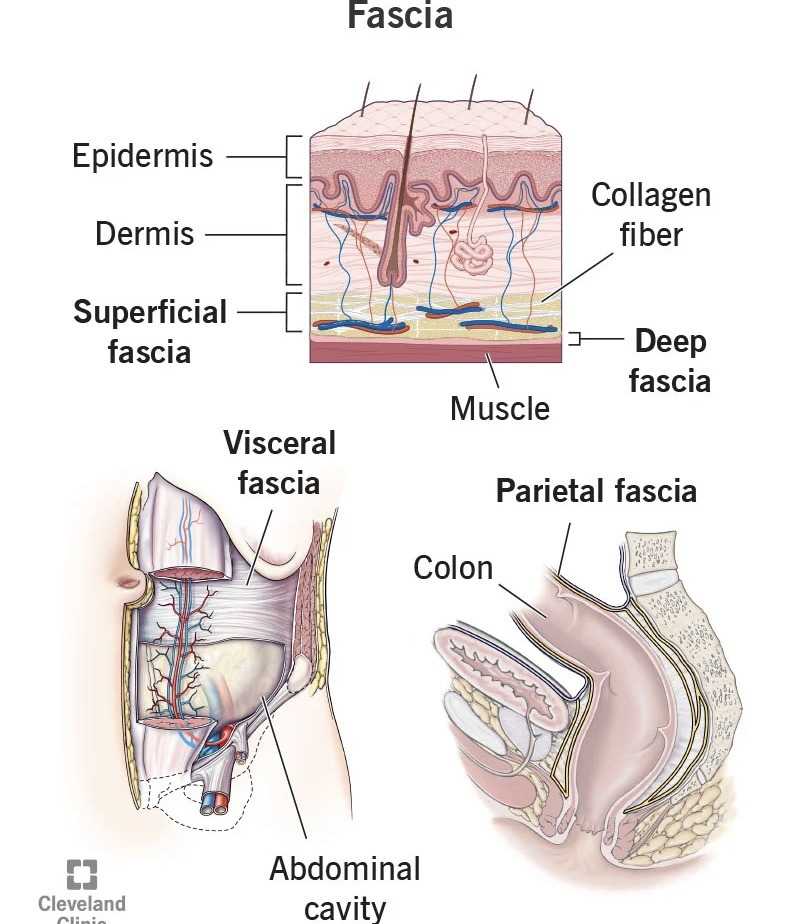
We all have four layers of fascia , they are:
The subserous or visceral fascia: associated mainly with the internal organs
The deep fascia: associated mainly with blood vessels , bones, nerves & muscles
The superficial fascia: directly under the skin
Parietal fascia: a general term for tissues that line the wall of a body cavity just outside of the parietal layer of serosa.
I’m going create another blog post going into detail about the different layers, but for now, being made aware of the fascial layers & where they are can help you when you go about your myofascial releases . These pictures below can help you gain more understanding on where the pain or restrictions could be stemming from. With that being said,
go manipulate your fascia, not people!
here some tools to help you :

<a rel="noreferrer noopener" href="http://<a href="https://www.amazon.com/Stainless-Steel-Scraping-Massage-Tool/dp/B075WTVKM6?_encoding=UTF8&pd_rd_w=UCmCa&content-id=amzn1.sym.fd890e16-d287-4109-9166-cf98a9958c4e&pf_rd_p=fd890e16-d287-4109-9166-cf98a9958c4e&pf_rd_r=42NW4NZVKSGW8WTT7QSF&pd_rd_wg=52xu4&pd_rd_r=c6442d4e-f9c4-4e49-926d-133b8aeaf887&linkCode=li2&tag=fontefit-20&linkId=c4be5808a84314b230d85eec7c1e07ac&language=en_US&ref_=as_li_ss_il" target="_blank"><img border="0" src="//ws-na.amazon-adsystem.com/widgets/q?_encoding=UTF8&ASIN=B075WTVKM6&Format=_SL160_&ID=AsinImage&MarketPlace=US&ServiceVersion=20070822&WS=1&tag=fontefit-20&language=en_US" ></a>

 FONTÈ FITNESS
Leave a comment